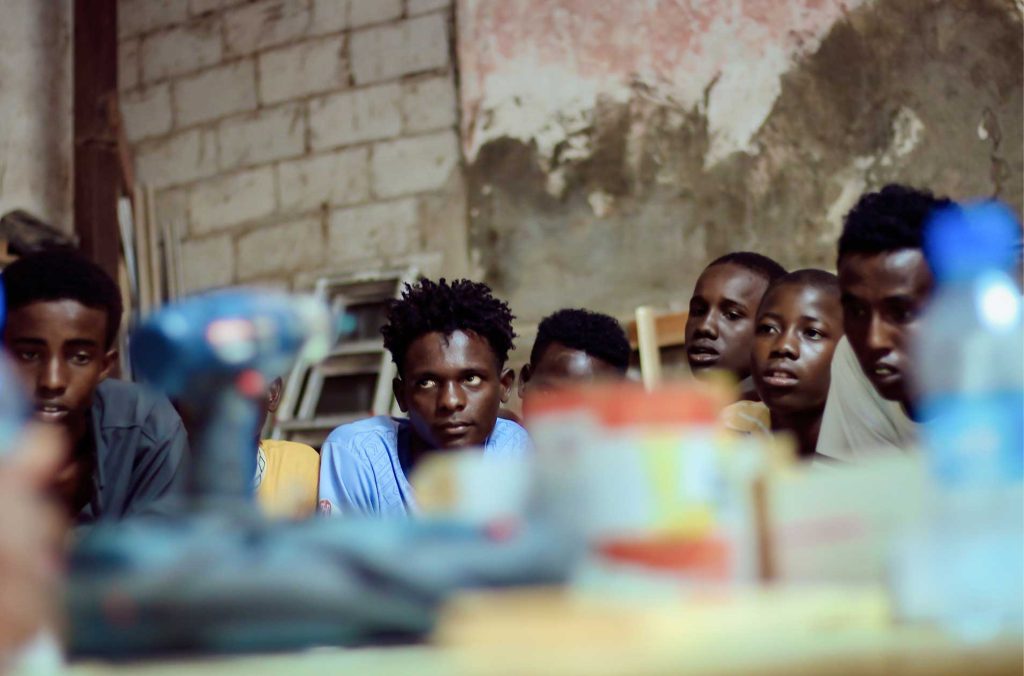
When 23-year-old Ifrah Abdiweli witnessed the murder of her parents at age 7, trauma didn’t just steal her childhood—it nearly stole her future. Today, after completing our trauma-informed program, she’s employed, thriving, and inspiring our entire team. Her journey illuminates why traditional development fails and trauma-informed approaches succeed.
In communities devastated by conflict, climate shocks, and poverty, development programs consistently underperform. Skills training programs see high dropout rates. Microfinance initiatives fail to create sustainable businesses. Educational interventions struggle with poor attendance and learning outcomes.
The missing piece isn’t better curriculum or more funding—it’s understanding how trauma creates invisible barriers to human potential.
The Neuroscience of Broken Dreams
Trauma literally rewires the brain, creating barriers that traditional development programs cannot address:
Cognitive Impacts:
- Impaired concentration and memory
- Difficulty processing new information
- Compromised decision-making abilities
Interpersonal Challenges:
- Difficulty trusting others
- Social withdrawal and isolation
- Disrupted attachment patterns
Emotional Dysregulation:
- Intense mood swings and anxiety
- Depression and hopelessness
- Difficulty managing emotions
Physical Manifestations:
- Chronic pain and sleep disorders
- Weakened immune system
- Stress-related illnesses
Real Stories: The Human Cost of Unaddressed Trauma
Ifrah’s Transformation: At age 7, Ifrah witnessed her parents’ brutal murder during Somalia’s civil war. Despite her uncle’s care and teachers’ support, she remained “emotionally withdrawn and disconnected” for years. Traditional support wasn’t enough.
After our counselor identified her needs and she completed our specialized trauma program, Ifrah experienced a “remarkable journey of healing and transformation.” Her uncle expressed “deep gratitude for the intervention,” acknowledging its “profound impact.” Today, she’s employed and serves as inspiration for our entire team.
Khadija’s Crisis and Recovery: This 32-year-old mother of three reached a breaking point, experiencing panic attacks and complete isolation. When she contacted our emergency response team, they provided immediate psychological first aid—breathing exercises, emotional validation, and practical support.
The transformation was immediate and lasting. Six months later, Khadija “looked back on that night as a turning point.” She returned to work, reconnected with loved ones, and “felt equipped to handle life’s challenges” with the coping tools our team provided.
The Integrated Solution: Beyond Band-Aid Approaches
Our trauma-informed development model addresses root causes, not just symptoms:
Immediate Stabilization:
- Psychological first aid for crisis intervention
- Safety planning and emotional regulation techniques
- Community-based support networks
Therapeutic Intervention:
- Individual and group counseling
- Cognitive behavioral therapy adapted for cultural context
- Family therapy and intergenerational healing
Skills Development:
- Trauma-informed job training that accounts for healing timelines
- Life skills education emphasizing emotional regulation
- Leadership development for trauma survivors
Community Healing:
- Collective trauma processing sessions
- Reconciliation dialogues and peace-building
- Stigma reduction campaigns
Measurable Transformation: The Data Behind Hope
Individual Outcomes:
- 98% improved emotional regulation among trauma survivors
- 83% reduction in depression rates (78% to 13%)
- 88% reduction in anxiety levels (68% to 8%)
- 100% employment retention for participants receiving trauma-informed support
Program Success Rates:
- 322 ex-combatants successfully rehabilitated and reintegrated
- 1,000+ conflict-affected individuals receiving ongoing counseling
- 275 community members trained in psychological first aid
The Economic Case for Trauma-Informed Development
Kadar Abdiwahab Mohamed’s Story: This 19-year-old orphan excelled in mathematics until secondary school pressures triggered anxiety and depression, forcing him to drop out. Traditional approaches would have written him off.
Our trauma-informed program provided mindfulness techniques, stress management strategies, and behavioral therapy. As his mental health improved, so did his determination. He re-enrolled, graduated with academic honors, and now serves as inspiration for other youth facing similar challenges.
Amino’s Recovery: A mother of four struggling with moderate depression, Amino participated in our program’s comprehensive psychological assessment and culturally-adapted behavioural therapy. “I never thought I could feel this way again,” she reflects, describing renewed engagement with her children and household responsibilities.
Innovation in Crisis Response
Najmo’s Resilience: At 23, Najmo supports four siblings after losing her mother to drought and displacement. Our program provided mental health training that helped her “take care of her own well-being and that of her family” while building a successful snack business.
Mohamed’s Leadership Journey: Feeling “lost and uncertain” after secondary school, 26-year-old Mohamed discovered purpose through our counselling program. Today, he facilitates peer support groups and organizes community gatherings, transforming from beneficiary to leader. “These sessions taught me that I can make a difference, not just in my life but in the lives of others.”
The Global Imperative
In a world where 2+ billion people live in conflict-affected or climate-shocked regions, trauma-informed development isn’t optional—it’s essential. Traditional programs that overlook trauma may fail because they’re building on broken foundations.
For donors seeking sustainable impact, trauma-informed approaches offer a viable path to genuine transformation—healing minds first, then building futures.