When Malyun Ali Abdirahman’s family lost everything to floods, she nearly abandoned her university studies. Today, she works at the Ministry of Education advocating for girls’ education and mental health awareness. Her transformation illustrates why global research shows mental health interventions deliver up to 23.6:1 returns on investment.
The economic case for mental health in development isn’t just compelling—it’s overwhelming. Yet most development programs continue to treat mental health as an add-on rather than the foundation. Iftin Global has spent years proving why this approach fails and demonstrating a better way forward.
The Hidden Economic Catastrophe
Untreated mental health conditions drain $1 trillion annually from the global economy. In conflict-affected regions like Somalia, where we work, the burden is exponentially worse:
- 22.1% of people experience PTSD, depression, or anxiety
- 76% of youth carry trauma severe enough to rewire their brains and impair cognitive function
- Only one-third of post-conflict economies recover within 5 years when trauma goes untreated
The individual-level impacts create cascading economic damage:
- 63% drop in work capacity when trauma remains untreated
- 80% higher dropout from job training programs for youth with unaddressed trauma
- $5,000 annual wage loss per worker with PTSD
- 50% reduction in lifetime earnings potential
Our Economic Breakthrough: Real Numbers, Real Impact
When we integrated mental health support into our employment programs, we didn’t just improve wellbeing—we transformed economic outcomes entirely.
The Comparison Study: We evaluated 376 youth across two cohorts. Both received identical technical training and job placement support. One cohort also received structured mental health interventions.
Results:
- Without mental health support: 88.3% employment rate, $574,013 economic value generated
- With mental health support: 99.5% employment rate, $1,322,567 economic value generated
- Impact: Mental health integration increased employment by 11.2 percentage points and more than doubled economic returns
But the real breakthrough came from our pilot program that provided only counseling, mentorship, and life skills—no vocational training whatsoever. Results:
- Without mental health support: 88.3% employment rate
- With mental health support: 99.5% employment rate
- Impact: Mental health integration increased employment by 11.2 percentage points and generated 42% more economic value per person employed
But the real breakthrough came from our pilot program that provided only counseling, mentorship, and life skills—no vocational training whatsoever. Results:
- Employment rates doubled
- Depression dropped from 78% to 13% (83% reduction)
- Anxiety fell from 68% to 8% (88% reduction)
Cost-Effective Innovation at Unprecedented Scale
Our integrated mental health approach proves that adding mental health support costs very little but transforms outcomes entirely. When we add mental health to employment programming, participants generate 4.37 times more value than we invest—matching the exceptional returns the WHO/World Bank found globally (4:1) and nearly doubling traditional employment programs alone (2.26x).
Here’s how we achieve these remarkable returns with minimal additional cost:
Low-Cost Mental Health Integration:
- Professional trauma healing at just $2.50-$4.15 per session (vs $85-170 globally)
- Each counselor reaches 100 clients monthly through efficient group and individual sessions
- 79 trained professionals now serving over 79,000 people
Increased Economic Returns:
- $1.9 million in economic value generated through our programs
- 1,867 youth trained in sustainable livelihoods
- Almost $1 million invested in grants to youth entrepreneurs
- Small investments in mental health = massive economic returns.
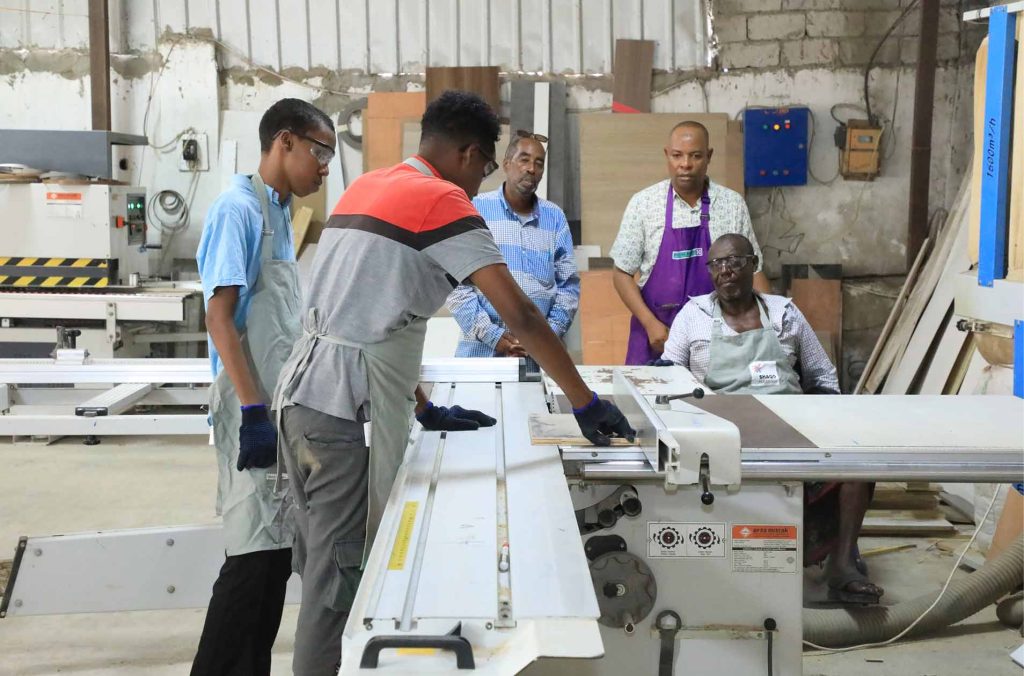
The Multiplier Effect: From Individual Healing to Economic Transformation
Ali Omar Ali’s Journey: Born in Jamame, Ali lost his father young and fled drought with his family on a four-day barefoot journey he calls “the hardest time of their lives.” Arriving at an IDP camp, he became sole provider for his disabled mother and six siblings.
After completing our mental health and employment program, Ali secured work with a construction company. His transformation rippled outward:
- His family escaped extreme poverty
- His success inspired other camp residents to seek help
- Local businesses benefited from increased spending
- Community stigma around mental health decreased
Ahmed Abdi’s Transformation: After losing his parents at a young age, Ahmed sold the family’s three cows and moved to town with his siblings. Despite multiple job search attempts, his lack of literacy and untreated trauma created insurmountable barriers.
Following our program, Ahmed started as a taxi driver, then he saved up to open a small kiosk. Today, he owns four large shops and is a successful businessman. His success created dozens of jobs and demonstrates how healing trauma unlocks entrepreneurial potential.
The Global Economic Opportunity
Recent research reveals that adolescent mental health interventions show 23.6:1 return ratios over 80 years, with highest returns in:
- Low-income countries: 97.8:1
- Lower-middle income countries: 94.6:1
With 75-85% of people with mental disorders in LMICs receiving no treatment, we face both a humanitarian crisis and the largest untapped economic opportunity in development.
Strategic Investment Opportunity
For development donors, mental health integration offers:
- Proven economic returns exceeding most interventions
- Scalable delivery models tested in challenging contexts
- Massive unmet need affecting 2+ billion people globally
- Clear integration pathways into existing programs
The World Health Organization’s landmark study across 36 countries shows every $1 invested in depression and anxiety treatment returns $4. Our results nearly double that while creating permanent local capacity.
Why This Matters Now
As Yussuf, one of our pharmacy graduates who now runs “Healing Hands Pharmacy,” demonstrates: when we heal minds first, economic transformation follows. His integrated health center has become a community hub, reducing mental health stigma while generating sustainable revenue.The evidence is overwhelming: mental health isn’t separate from economic development—it’s the foundation that makes everything else possible.